
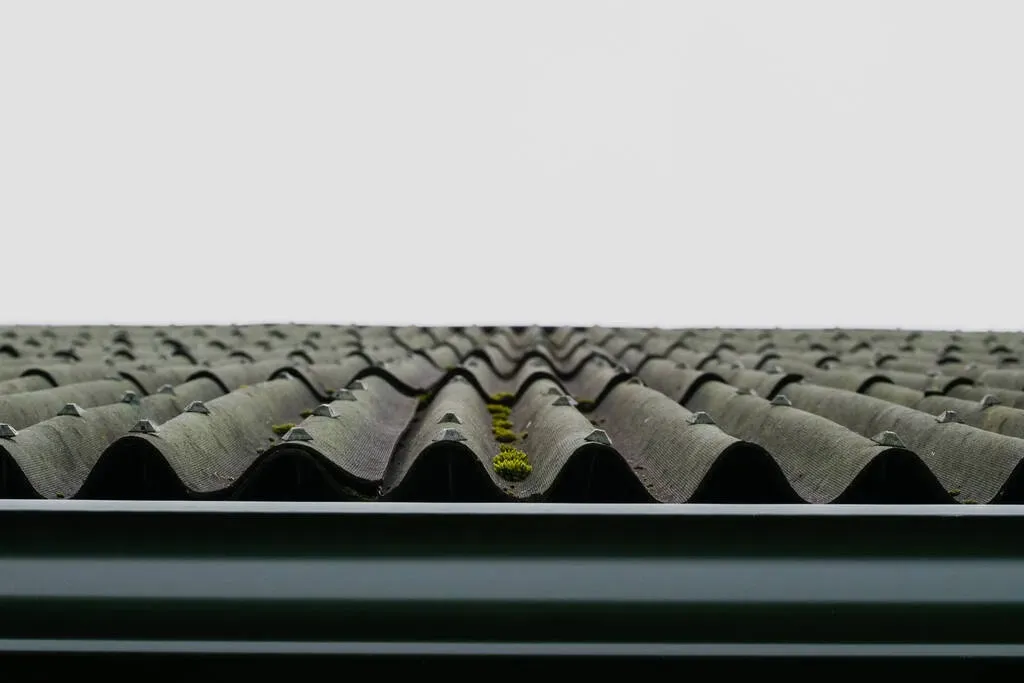
A Boronia roof grows moss faster than a roof in Bentleigh, and the reason has nothing to do with how clean the house is. Boronia sits in the foothills of the Dandenongs, catches more rain than the city, and sits under a canopy that keeps tiles damp for days after the rain stops.
The growth that follows does real damage. It does it in three places you can’t see from the driveway: under the tile laps, in the bedding beneath your ridge caps, and in the valleys where two roof faces meet. By the time the problem is obvious inside the house, the cheap version of the fix has usually passed.
Here is what is growing, what it is doing, and how it comes off without taking your tiles with it.
Why do Boronia roofs grow more moss and lichen than roofs closer to the city?
Boronia roofs grow moss and lichen because the suburb sits in the Dandenong foothills, where moist air is forced upward and drops more rain than inner Melbourne. Add eucalypt canopy and shaded slopes, and tiles stay wet for days.
That is more water landing on the same tile every year, and it arrives in a suburb where mature gums shade rooflines and hold morning damp in the gullies. Growth needs three things: moisture, shade and something porous to hold on to. Boronia supplies all three, and a 1970s concrete tile supplies the third better than almost any other roofing material in Australia.
The slope that goes first tells you what you are dealing with
Stand on the footpath and look at which roof face is the worst. It is the cheapest diagnostic available, and it is usually right.
- South and south-east faces go first, evenly. Normal for the suburb. Those faces get the least winter sun and dry slowest. You have a climate and aspect problem, and the answer is maintenance on a cycle.
- One patch, on any face, directly under a tree. A canopy problem. Leaf litter is feeding the growth and holding water against the tiles. Trimming back the overhanging limbs will do more for that roof than a clean will.
- Growth spreading uphill from the gutter line. A drainage problem. Water is backing up rather than leaving, usually because the gutters are full or the fall is wrong. Cleaning the tiles without fixing that gets you six months.
- Heavy growth on the north face. Unusual, and worth a proper look. A north-facing slope holding growth generally means the tiles have lost their surface and are now holding water like a sponge.
What is actually growing on your roof
Three different organisms get called “moss” from the ground, and they attach in three different ways. That difference decides how the roof gets cleaned.
| Growth | What it looks like | How it attaches | What removes it |
| Algae | Flat black, green or grey staining, no thickness | Sits on the surface as a film | Treatment and a low-pressure rinse. The easiest of the three |
| Moss | Green cushions and clumps, thickest along the laps and in the valleys | Shallow anchoring into surface texture and debris, holds many times its own weight in water | Kill first, allow it to die back, then brush and rinse at low pressure |
| Lichen | Flat crusty patches, grey, white, orange or pale green, looks painted on | Grows fungal threads down into the pores and releases organic acids that etch the surface | Chemical treatment only, then weathering. Scraping takes tile surface with it |
Lichen is the one that matters most, and the one homeowners underestimate because it is flat and slow and doesn’t look like much. It is the only one of the three that grows into the tile rather than on it.
What do moss and lichen actually do to roof tiles?
Moss and lichen damage tiles by keeping them permanently wet, not by freezing. A saturated tile loses its surface coating faster, becomes more porous, and then holds more water, which grows more moss. Moss also dams water at the overlap between tile courses, where roofs rely on gravity and a clear channel to shed water down the slope.
That second point turns a cosmetic issue into a repair bill, so it is worth being specific about.
The saturation loop
Concrete tiles are manufactured with a surface coating over a porous body. Terracotta relies on a fired surface, and on older roofs that surface has often worn thin. Either way, a tile that never fully dries breaks down at the surface faster than one that dries between showers. Once the surface is gone, the body underneath drinks. A more porous tile is a better host, so the next generation of growth arrives heavier and faster than the last. Left alone, this compounds quietly for years.
Damming at the laps
Roof tiles do not seal. They shed. Each course overlaps the one below, and water runs down that overlap and into the gutter. Moss growing along a lap line does exactly what a small dam does: it holds water in the overlap instead of letting it pass. Held water travels sideways and upward by capillary action, gets under the lap, and lands on the sarking or, in older Boronia homes with no sarking at all, on the ceiling batten and the insulation above your bedroom.
This is why the first sign of a moss problem is so often a stain in a ceiling corner after a long wet week rather than a leak during a downpour.
Weight, valleys and gutters
Saturated moss is heavy. On a large roof, it adds a load nobody designed for, though on most homes, the load is a secondary concern. The higher cost is where the growth ends up when it finally lets go. It washes into the valleys and the eaves gutters, packs down with leaf litter, and stops the roof from draining. A blocked valley on a Boronia roof under gums is one of the most reliable causes of internal water damage.
Bedding and pointing
Under every ridge cap is a bed of mortar, and over that, a pointing compound. Constant moisture works on old sand-and-cement bedding, and growth takes root in the cracks and widens them. Once the bedding is loose, the ridge caps move, and a moving ridge cap is a leak with a schedule. If your roof has moss and the pointing has hairline cracks running along it, cleaning alone will not fix the roof.
Do not paint or seal a roof that still has live lichen. The coating will not bond to the biofilm, and it will fail within a season, usually in patches that look worse than the growth did. Any restoration quote that does not include killing the growth first is quoting you a job that will come back.
Should you pressure wash moss off roof tiles?
No. High-pressure washing strips the surface coating from concrete tiles and leaves them more porous than before, so the growth returns faster and heavier. It also drives water up under the tile laps into the roof space, cracks brittle tiles and blows out ridge pointing. A chemical treatment followed by a low-pressure rinse does the job without that damage.
The temptation is understandable, because pressure works and it works immediately. The roof looks excellent for one season. What has actually happened is that you have removed what you could see, left the lichen in the pores, and given the next colony a better surface to grow on.
Terracotta is the worst candidate for pressure. Once the fired surface is worn, high pressure takes what is left, and there is no factory coating underneath to fall back on. On terracotta, treat, rinse gently and consider a sealer afterwards.
How the growth comes off properly
The sequence matters more than the products. Done in the right order, a soft wash handles most Boronia roofs in one visit, followed by a wait.
- Inspect before touching anything. Cracked tiles, loose ridge caps and failed pointing all need to be found before water goes anywhere near them. This is a walk on the roof (which should be done by a professional), not a look from a ladder.
- Clear the gutters and valleys first. Everything that comes off the tiles is heading there. Clearing afterwards is a second job.
- Apply a treatment and leave it. Killing lichen is chemistry, not force. The organism has to die back before removal, and that takes weeks, not hours.
- Brush and rinse at low pressure, working down the slope. Down the slope is the direction the laps are built to shed. Working uphill is how water gets into the roof space.
- Let the roof weather. Dead lichen keeps breaking down and washing off in the rain over the following months. A roof that looks 90% clean on the day usually finishes itself.
The realistic timeline is a day on the roof and then two to three months of weathering. Anyone promising a heavily lichened roof will be spotless by tomorrow afternoon is telling you they intend to use pressure.
Keeping it off a Boronia roof
You will not get a permanent result in this suburb. The rainfall and the trees are not negotiable. What you can do is stretch the cycle from three years to five or six.
| What to do | How often | What it buys you |
|---|---|---|
| Clear gutters and valleys | Twice a year, especially in autumn | Drainage, and the single biggest reduction in regrowth |
| Trim limbs overhanging the roof | Every 2 to 3 years | Light and airflow onto the slope that grows first |
| Soft wash and treat | Every 3 to 5 years in the foothills | Resets the surface before lichen bonds into the pores |
| Seal or coat after cleaning | At restoration, not as a standalone | A less porous surface, which slows the loop meaningfully |
| Improve roof ventilation | Once | A drier roof space, and less condensation feeding the underside |
When cleaning is no longer the right job
Cleaning a roof that has already lost its surface is money spent on appearance. At that point, the roof needs restoring rather than washing. A restoration replaces broken tiles, re-beds and re-points the ridge caps with a flexible compound, and seals the tile surface so it stops absorbing water.
The threshold is easier to spot than most people expect. If the tiles are chalky and light-coloured where the growth has been lifted, the surface has gone. If the pointing is cracked along its length, or a ridge cap moves when you press it, the bedding has gone. Either one means the clean is a step in a bigger job, not the job itself.
Start with the gutters
If you do one thing this month, clear the gutters and the valleys, then look at which slope holds the most growth. That five-minute observation tells you whether you are dealing with shade, a tree, drainage or a tile surface that has already gone, and it decides which conversation you need to have next. If the growth is thick along the lap lines or the pointing is cracked, get someone on the roof before winter rather than after it.