
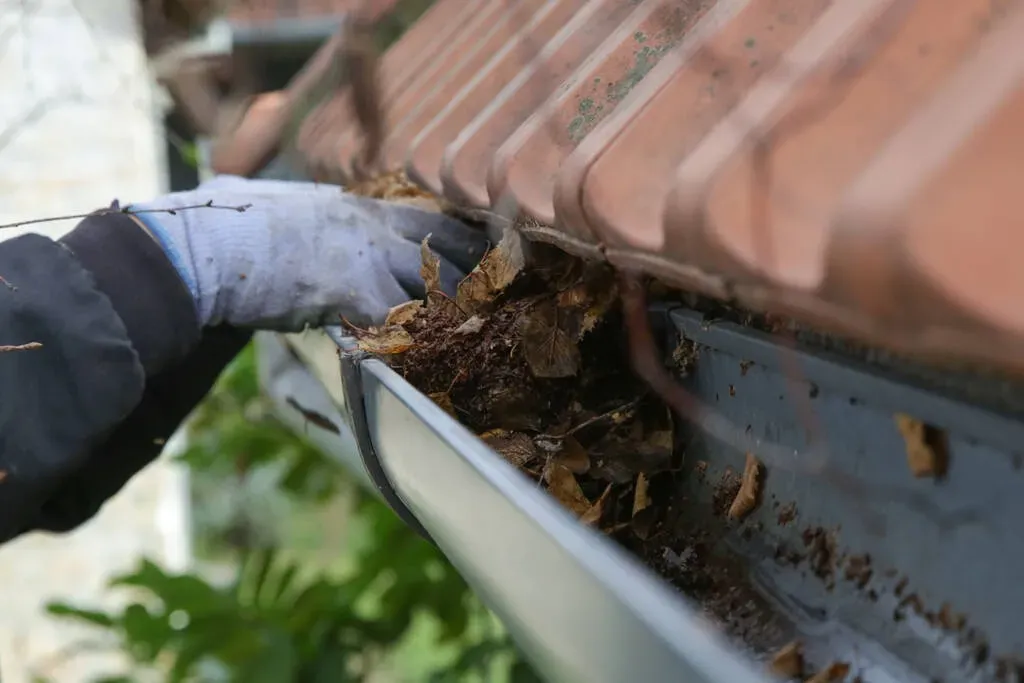
Moorabbin sits about 3 km from the coast of Port Phillip Bay. On every steel manufacturer’s exposure map, that puts the suburb in the mildest category, well past the distance where salt is meant to be a design consideration. And yet Moorabbin roofs rust, mostly at the gutters, mostly at the same handful of points, and usually years before the homeowner expects it.
The reason is not the postcode. Corrosion here starts where rain never reaches, because rain is what washes salt and industrial fallout off a roof before it can do anything. The parts of your house that stay dirty are the parts that fail, and they are almost entirely predictable.
Is Moorabbin close enough to Port Phillip Bay for salt to corrode a roof?
Not by distance alone. Moorabbin sits roughly 3 km from Port Phillip Bay, which is calm marine water rather than breaking surf, and steel manufacturers classify anything beyond about 1 km from a calm marine influence as a benign environment. Salt still reaches Moorabbin on the sea breeze, but it corrodes surfaces only where rain does not wash it away.
That distinction is the whole article, so it is worth understanding properly.
Calm marine is not the same as surf coast
Manufacturer exposure guidance sorts environments by how much salt is landing, and breaking surf throws far more airborne salt inland than a sheltered bay does. Port Phillip is enclosed. Sorrento back beach and Moorabbin are not the same problem, and a roofer quoting you severe-marine products in Moorabbin is either being cautious or being expensive.
What Moorabbin does get is a steady onshore sea breeze off the bay through summer, carrying a light salt load a few kilometres inland. Light is the operative word. A rain-washed roof surface sheds it. An unwashed one accumulates it.
The input most bayside articles forget
Moorabbin’s eastern side has been industrial since the mid-1960s, and the suburb sits within a few kilometres of Moorabbin Airport, one of the busiest general aviation fields in the country. Industrial and traffic fallout adds particulates that hold moisture against a surface, and manufacturers treat industrial influence with the same seriousness as marine influence. COLORBOND steel gutter warranties, for instance, require installation more than 200 m from marine or industrial influence.
So the correct picture of Moorabbin is a mild environment with two low-level inputs, rather than a harsh one with a single obvious cause. That changes the fix. You do not need exotic materials here. You need the dirt off.
Why does corrosion start in unwashed areas?
Unwashed areas corrode because salt, dust and organic debris settle there and hold moisture against the steel for days instead of hours. Rain flushes exposed roof surfaces clean, so those surfaces last. BlueScope’s maintenance guidance requires unwashed areas to be hosed with fresh water at least every six months, and every three months in coastal or industrial areas.
BlueScope also excludes corrosion arising in unwashed areas from warranty cover.
Read that second point again, because it is the part homeowners find out about at claim time. A roof can fail early through no fault of the product and still not be covered, because the failure happened in a spot the warranty required you to wash.
The five places rain never reaches
| Where | Why rain misses it | First visible sign | What to do |
| Inside the eaves gutter | Rain arrives loaded with roof debris and leaves it behind. Silt sits below the water line. | Brown staining at the low end, then pinholes at the joints. | Flush with fresh water after clearing, twice a year. |
| Underside of the gutter and the fascia joint | Fully shielded from rain by definition. | Rust bleed running down the fascia. | Hose the underside when you clear the gutter. Nobody does this, and it is the highest-value five minutes on the list. |
| Under solar panels and antenna mounts | Panels shed rain around them, leaving a permanently dry, dirty strip beneath. | Streaking either side of the array. | Rinse under and around the array when panels are cleaned. |
| Behind downpipe brackets and against wall flashings | The gap traps debris and holds water by capillary action. | A rust line following the bracket outline. | Clear the gap, and check the fixings are not the wrong metal. |
| Valley irons under the tile line | Covered by tiles at the edges, and packed with leaf litter through autumn. | Damp ceiling near a valley, often before any rust is visible. | Clear valleys every autumn. Replacement is a roof job, not a gutter job. |
The pattern in that table is worth naming. Every entry is a place where debris collects, and water lingers, and none of them is places you can see from the ground. Corrosion in Moorabbin is a maintenance-access problem long before it is a materials problem.
Dissimilar metals will ruin a good roof faster than the bay will
Put two different metals in contact, or let run-off from one land on the other, and the less noble one corrodes rapidly. It is chemistry, it is fast, and it is almost always introduced by someone doing unrelated work on the house.
- Copper anywhere above steel. Run-off from copper flashings, copper pipe or a copper aerial strap onto a ZINCALUME or COLORBOND roof causes bimetallic corrosion in a visible stripe. Manufacturers explicitly exclude it from warranty.
- Lead flashings on a metal roof. Common on older chimney and wall junctions, and a problem where run-off crosses steel. On a tiled roof with steel valleys, check where the water from a lead flashing actually goes.
- The wrong fasteners. Roof screws are classified under AS 3566 for corrosion resistance, and a hardware-store screw in a bayside roof will bleed rust around every fixing within a few seasons. If you can see a rust halo at each screw, the fasteners are the problem, not the sheet.
- Treated pine against steel. Chemicals in treated timber attack steel in contact with it, particularly when the timber is wet. It shows up where a pergola or a shed frame meets roofing or guttering.
- Concrete and mortar debris left in a gutter. Alkaline material sitting in the base of a gutter after roof work will pit the steel from the inside. Any roofer who re-points a ridge should be flushing your gutters before they leave.
Tell your solar installer, antenna technician and plumber in advance that nothing copper or lead goes onto the roof. Every one of these trades has a standard way of doing things that may involve a copper strap or a lead saddle, and none of them will be back in five years when the stripe appears.
How often should you wash a roof and gutters in Moorabbin?
Twice a year for exposed surfaces and unwashed areas, moving to every three months for the unwashed areas if your home is close to the industrial precinct or backs onto a busy road. Fresh water is enough for most of it. Use a soft brush and a mild detergent only where hosing alone leaves a film, then rinse thoroughly.
Autumn is the priority visit, because that is when the leaf load arrives and when the gutters and valleys stop draining. Spring is the tidy-up. Two visits, tied to something you already remember, beat a perfect schedule you abandon in March.
While you are up there, the useful habits are cheap:
- Flush, do not just scoop. Removing the leaves and leaving the silt achieves about half the job. The silt is what holds the moisture.
- Hose the outside and the underside of the gutter, not only the inside.
- Check the fall. Water sitting in a gutter after the rain stops means the fall is wrong or a bracket has dropped. Standing water accelerates everything in this article.
- Look at the joints and the internal corners. Every gutter fails at a joint, a corner or an outlet before it fails in the middle of a run.
Repair or replace
The threshold is physical, not aesthetic. Surface rust that has not gone through the steel can be cleaned back, treated and coated, and that is a repair. Once the steel is perforated, coating over it is decoration, because water is already passing through and the perforation will spread from the inside where you cannot reach it.
Test it directly. Press firmly on the rusted section with a screwdriver handle. If it dents or gives, or if you can see daylight or a weep on the underside, that section is finished. On gutters, one failed section in an otherwise sound run can be replaced on its own, provided the profile still matches. If the low points and joints are all going at once, replacing the run costs less than three visits to chase leaks along it.
Valleys are the exception, and the one to take seriously. A valley iron rusts under the tiles where nothing shows, and the first symptom is usually a damp ceiling. Replacing one means lifting tiles on either side, which is roofing work rather than gutter work, and it is not worth deferring once it is leaking, because the cost then includes the ceiling.
Do the gutters before autumn
The single most useful thing a Moorabbin homeowner can do this month is clear the gutters properly, then hose the inside, the outside and the underside with fresh water. That one job addresses the two highest-risk items on the list above and gives you a clear look at the joints and outlets while you are there. If the water sits rather than draining, or the low ends are staining brown, get someone up there before the autumn leaf load arrives rather than after the first blocked-gutter overflow.