
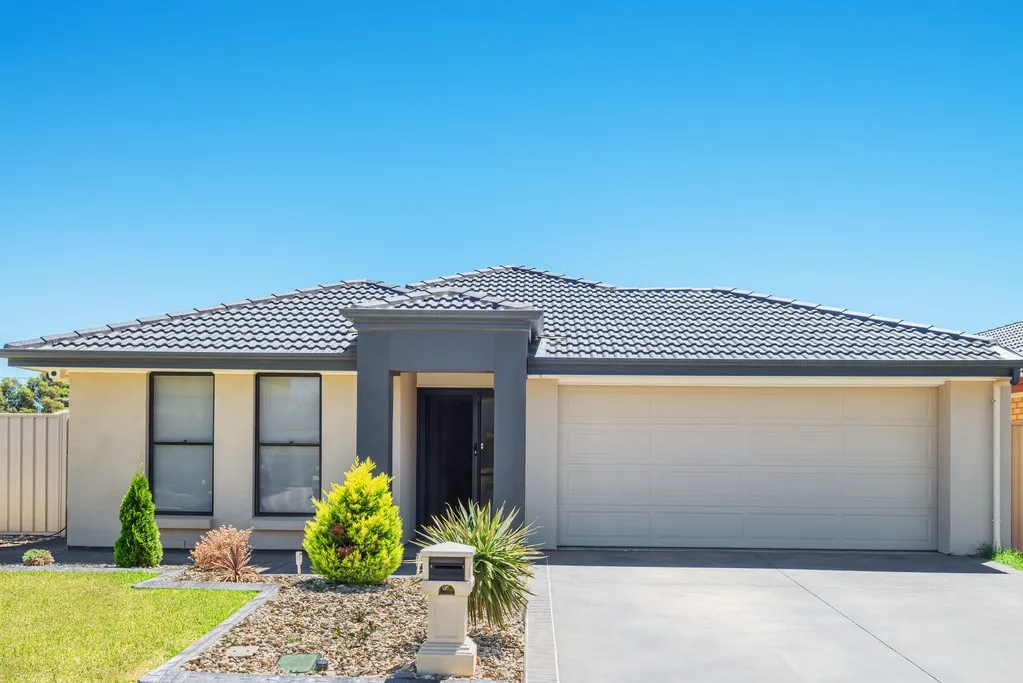
Most houses in Cranbourne’s newer estates were built with roof spaces that have almost no way to breathe. Narrow eaves, dark roofs, sealed sarking and bathroom fans that vent into the ceiling cavity all add up to the same two problems: upstairs rooms that stay hot well into the evening, and mould spots on ceilings through winter. Good roof ventilation fixes both, but only if air can get in low and out high. Adding a vent at the top of a roof with nowhere for air to enter is the most common way to spend money on ventilation and see no change.
Do Cranbourne homes need roof ventilation?
Many Cranbourne homes benefit from roof ventilation, especially estate houses with dark roofs, narrow eaves and sarking. Victoria adopted the NCC 2022 condensation management rules on 1 May 2024, which require roof space ventilation in Melbourne’s climate. Homes permitted before that date were generally built without it and are most likely to show heat and condensation problems.
The national building code divides Australia into climate zones, and Melbourne, including Cranbourne, sits in climate zone 6. Under NCC 2022, roof spaces in climate zones 6, 7 and 8 have to be provided with ventilation openings. Victoria’s building regulator confirms those condensation management rules were adopted in Victoria on 1 May 2024.
That date is a useful one for a homeowner. If your house had its building permit issued before May 2024, which covers nearly all of Cranbourne’s estates, there was no code requirement to ventilate the roof space. Some builders did anyway. Most did not.
Check your baseline: Look in your roof space for vents in the soffit (the underside of the eaves) and for any vent near the ridge. If you find neither, your roof space is effectively sealed, and each problem below is likely to occur.
Why estate homes trap heat and moisture
Cranbourne’s growth from the early 2000s produced a particular style of house, and several of its features work against the roof space.
Small eaves, or none. Narrow lots push houses close to the boundary, and many designs use 300 mm eaves or no eaves at all. Eaves are where intake vents normally go, so a house without them has nowhere natural for cool air to enter the roof.
Dark roofs. Charcoal and black tiles and Colorbond in dark colours dominate many estates. Research on planned estates has recorded dark roofs at 20 to 30°C hotter than light ones in summer. That heat radiates down into the roof space, then through the ceiling into the rooms below, and it keeps radiating well after sunset.
Sarking with no air gap. Sarking (the reflective or breathable membrane under the roof) is a good thing. It stops wind-driven rain and dust and reflects some radiant heat. But it also slows air movement, and on metal roofs, it can trap moisture against the underside of the sheet unless there is a ventilated gap. Victoria’s building regulator has flagged that the deemed-to-satisfy route for metal roofs with sarking needs a minimum 20 mm gap maintained across the roof space, plus vents at the eave and near the ridge.
Fans that vent into the roof. For years, bathroom, ensuite and laundry exhaust fans were commonly ducted into the roof space rather than outside. Every shower sends warm, wet air into a cold, sealed cavity. NCC 2022 now requires exhaust systems to discharge to outdoor air, but older homes are still running the old way.
Ducted heating in the roof. Gas ducted heating units and ductwork in the roof space add warmth and, if any joint leaks, moisture-laden house air into a cavity that cannot get rid of it.
Summer heat and winter condensation: The same fix
The two problems feel unrelated, but they share a cause: still air in the roof space.
In summer, the roof heats the trapped air, often to well above outside temperature, and that air sits on top of your ceiling insulation all afternoon and evening. Moving it out and replacing it with outside air lowers the temperature the insulation fights against.
In winter, the trapped air carries moisture from showers, cooking, breathing and unflued heaters. When it meets the cold underside of the roof overnight, it condenses. Water drips onto insulation and plasterboard, and by August, you see grey or black spots on the ceiling, usually in the corners of bedrooms and bathrooms on the coldest side of the house.
Can roof ventilation fix mould on my ceiling?
Roof ventilation can fix ceiling mould when the cause is condensation in the roof space, which is common in sealed estate homes. It works best combined with ducting bathroom and laundry fans to outside. Ventilation will not fix mould caused by a roof leak or moisture inside the room, so the source needs to be identified first.
A quick way to separate the causes: condensation mould shows up across cold corners and along external walls after cold, still nights, and gets worse through winter. Leak stains form under one specific spot and get worse after rain.
Your ventilation options compared.
| Option | How it works | Best suited to | Main limitation |
| Eave (soffit) vents | Low-level openings let cool outside air into the roof space | Any roof with eaves deep enough to fit them | Need a high-level outlet to work properly |
| Ridge or high-level vents | Openings near the peak let hot air rise and escape | Pitched roofs, paired with eave vents | Need intake air from below |
| Whirlybirds | Wind-driven turbine pulls air out through the roof | Roofs with good intake ventilation | Little effect on still days or without intake |
| Solar or powered roof fans | Electric fan extracts air on a thermostat or timer | Roofs with poor wind exposure, or when you want guaranteed airflow | Higher cost; can pull conditioned air from the house if intake is poor |
| Ducting exhaust fans outside | Bathroom and laundry fans vent through the roof or wall | Every home with fans venting into the roof space | Fixes moisture only, not heat |
| Lighter roof colour | Lighter coating reflects more sunlight | Concrete tile roofs due for restoration | Fixes heat only, not moisture |
Why do whirlybirds sometimes not work?
Whirlybirds often underperform because the roof space has no intake ventilation. A whirlybird can only pull out air that can be replaced, so on a house with sealed or narrow eaves, it draws little air or pulls conditioned air from the rooms below through downlights and gaps around the manhole. Pairing it with eave or low-level vents fixes the problem.
This is the single most useful thing to know before buying roof ventilation for an estate home. Air moves through a roof space like water through a pipe: on one end, out the other. Adding outlets without inlets just creates a vacuum, and the easiest air to pull into that vacuum is the heated or cooled air you have paid for inside the house.
On homes with no eaves, intake can still be created through vented eave strips, low-level gable vents, or vented ridge and eave products designed for tight eave details. The right choice depends on the roof shape and material, which is why a site inspection matters more than the product catalogue.
A common mistake: Fitting a powered roof fan to a sealed roof space. It will run, make noise, and much of the air it moves will come from your living areas. Check intake first, then size the outlet.
Does it cost much to run, and is it worth it?
Passive ventilation (eave vents, ridge vents and whirlybirds) costs nothing to run. Powered fans use electricity, though solar-powered models avoid that. The return shows up in two places: lower cooling loads in summer, and avoiding the cost of treating mould, replacing stained plasterboard and wet insulation in winter.
For homes with dark roofs, the larger gains often come from combining ventilation with a lighter roof colour when the roof is next restored. University of New South Wales research found that households with dark roofs in Sydney spent around $700 more a year on cooling than those with light roofs. Cranbourne’s climate is milder than Sydney’s hottest suburbs, so the number here will be smaller, but the direction is the same.
Newer rules are also worth noting. NCC 2025 becomes mandatory in Victoria from 1 May 2026 and adjusts the condensation provisions, including reduced ventilation requirements for small roofs. These apply to new building work, not existing homes, but they show the direction regulators are heading.
Your next step
Look in your roof space on a warm afternoon. If it feels like an oven and you can find no vents at the eaves or ridge, and you have seen mould on ceilings in winter, ventilation is likely worth doing. Call Taylor & Son Roofing on 0402 439 107 to book a roof ventilation assessment in Cranbourne. We will check the intake and outlet together, look at where your exhaust fans discharge, and recommend the combination that suits your roof rather than a single product.